 Sandalsand Norge >>
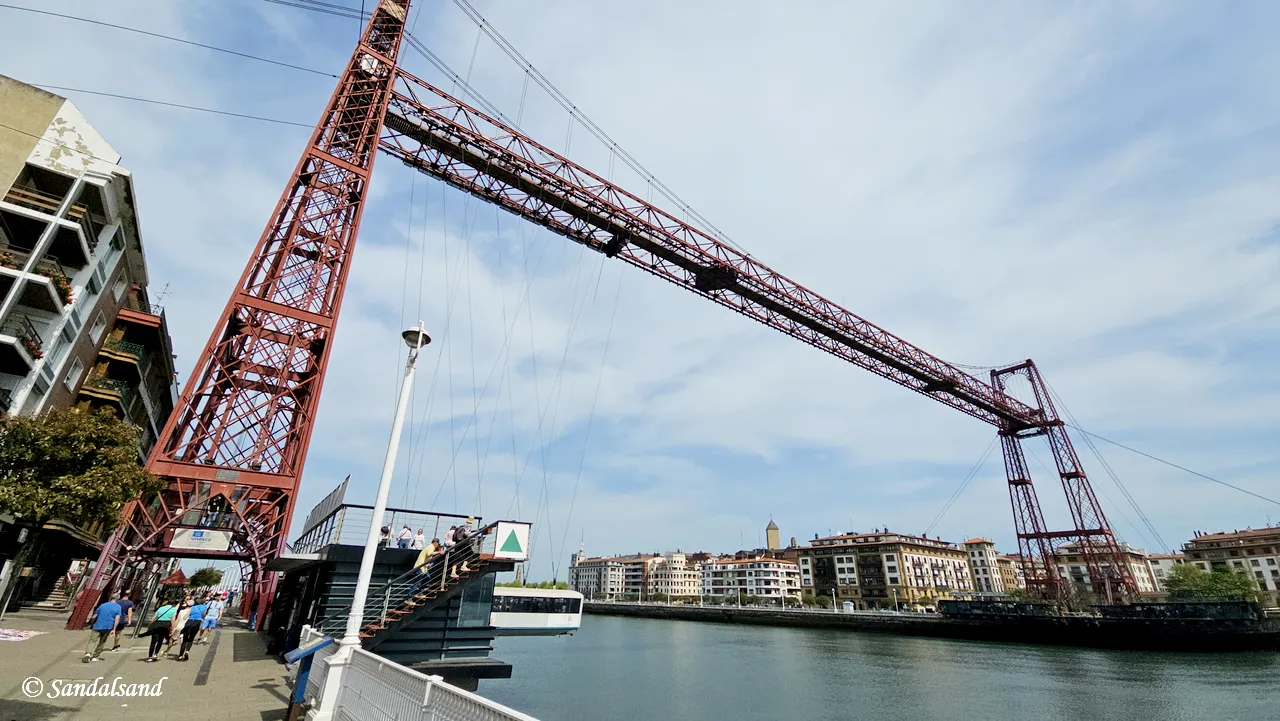
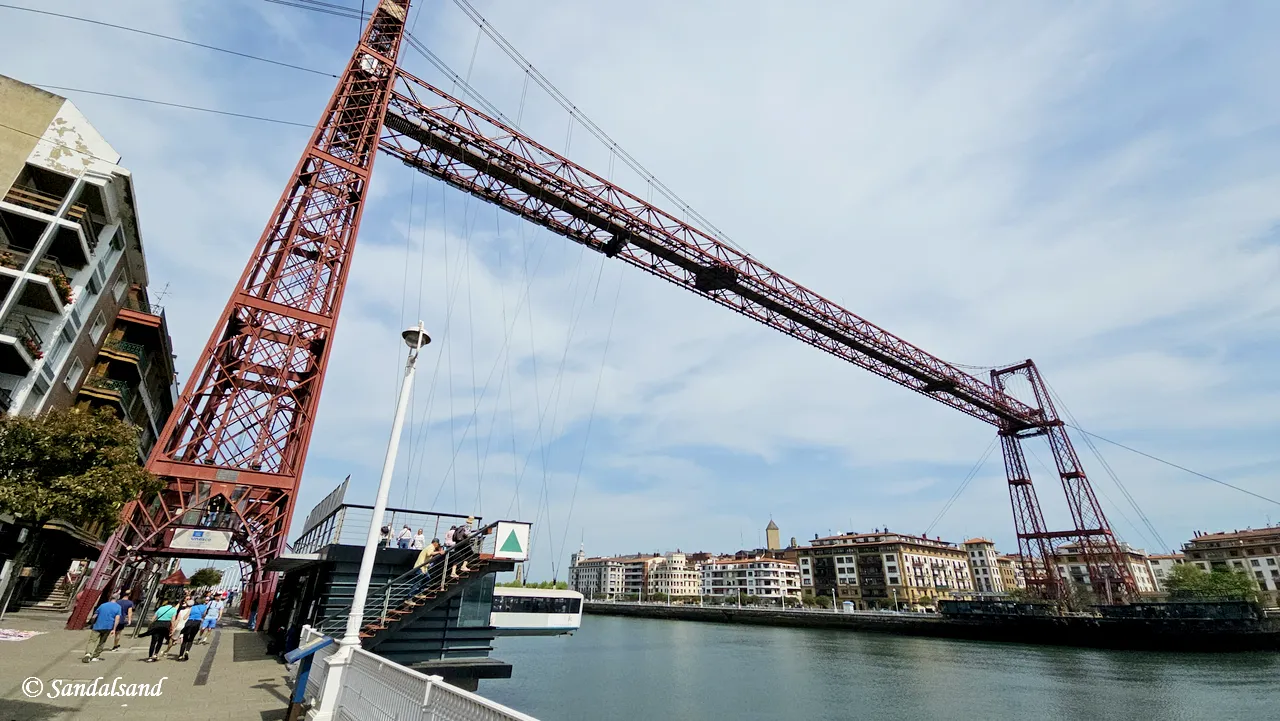
Crossing the historic Vizcaya Bridge near Bilbao, a remarkable nineteenth-century transporter bridge in the Basque Country.
The UNESCO World Heritage List includes over a thousand properties. They have outstanding universal value and are all part of the world’s cultural and natural heritage.
Official facts
- Official title: Vizcaya Bridge
- Country: Spain
- Date of Inscription: 2006
- Category: Cultural
UNESCO’s World Heritage Centre’s short description of site no. 1217:
Vizcaya Bridge straddles the mouth of the Ibaizabal estuary, west of Bilbao. It was designed by the Basque architect Alberto de Palacio and completed in 1893. The 45-m-high bridge with its span of 160 m, merges 19th-century ironworking traditions with the then new lightweight technology of twisted steel ropes. It was the first bridge in the world to carry people and traffic on a high suspended gondola and was used as a model for many similar bridges in Europe, Africa and the America only a few of which survive. With its innovative use of lightweight twisted steel cables, it is regarded as one of the outstanding architectural iron constructions of the Industrial Revolution.
More about the bridge
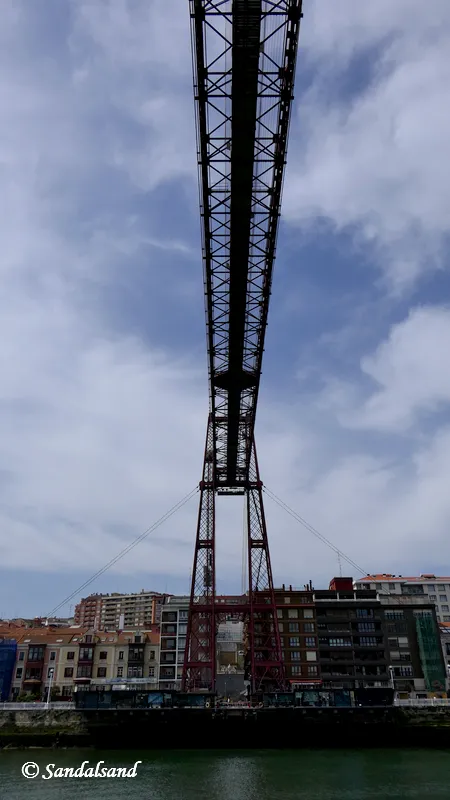
The Vizcaya Bridge links the towns of Portugalete and Getxo. It is one of the most unusual engineering solutions of the Industrial Revolution. At the time Bilbao was emerging as one of Spain’s great industrial ports.
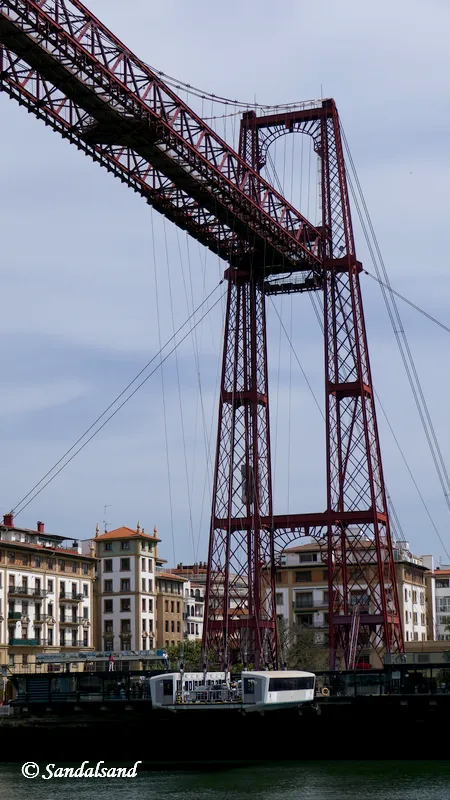
Rather than constructing a conventional bridge that would obstruct shipping traffic, the engineers created something entirely new: a transporter bridge. Suspended high above the water on a lattice of iron towers and steel cables, a moving gondola carries passengers and vehicles from one bank to the other while ships continue to pass unhindered beneath. This was the first bridge of its kind in the world. It became a model for similar structures later built across Europe, Africa and the Americas. Only a handful of those transporter bridges survive today.
The bridge is often described as a perfect fusion of beauty and functionality. Its elegant iron framework reflects the engineering confidence of the late nineteenth century, while its minimalist form gives it a surprisingly modern appearance even today.

My visit to the Vizcaya Bridge
Getting there
I was visiting Bilbao, one of the foremost destinations in the Basque Country, Spain, and indeed one of Europe’s most interesting urban centres. Before driving into the city centre, however, I was eager to visit this UNESCO World Heritage Site — as I often am when travelling to places I have never seen before.
I chose to approach the Vizcaya Bridge from Portugalete, on the southern side of the estuary. Despite its name, the town has no connection to Portugal. Built on steep hillsides overlooking the river, Portugalete is linked by a series of public escalators climbing up from the waterfront.
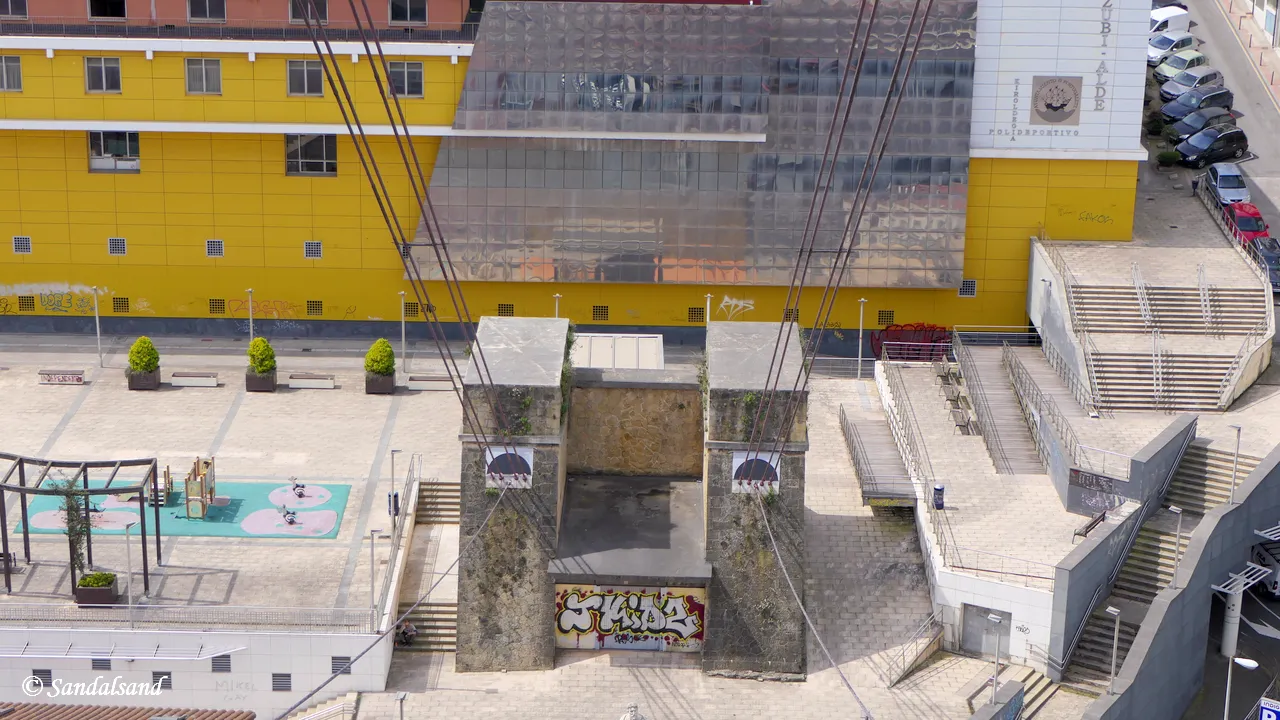
Parking near the bridge was surprisingly easy. I found a spot in the nearby Parking Zubi Alde garage, only a short walk from the gondola terminal. My advice: use it.


Across the bridge in the gondola
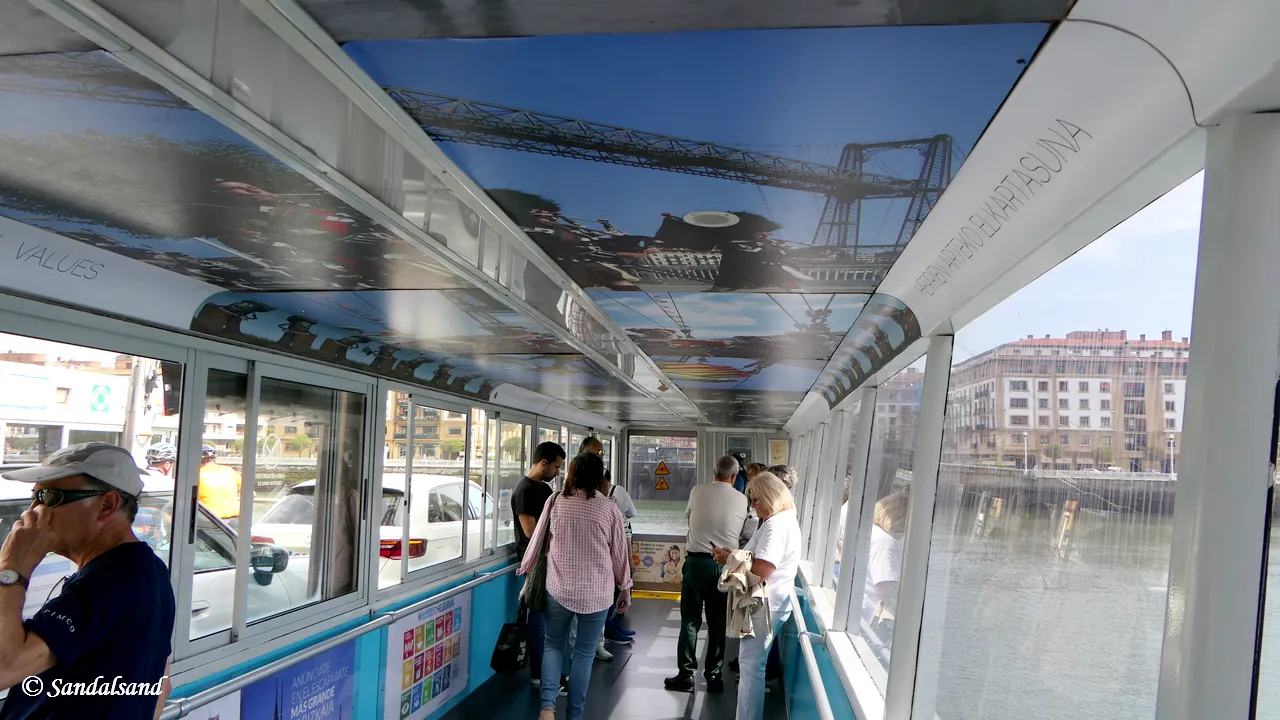
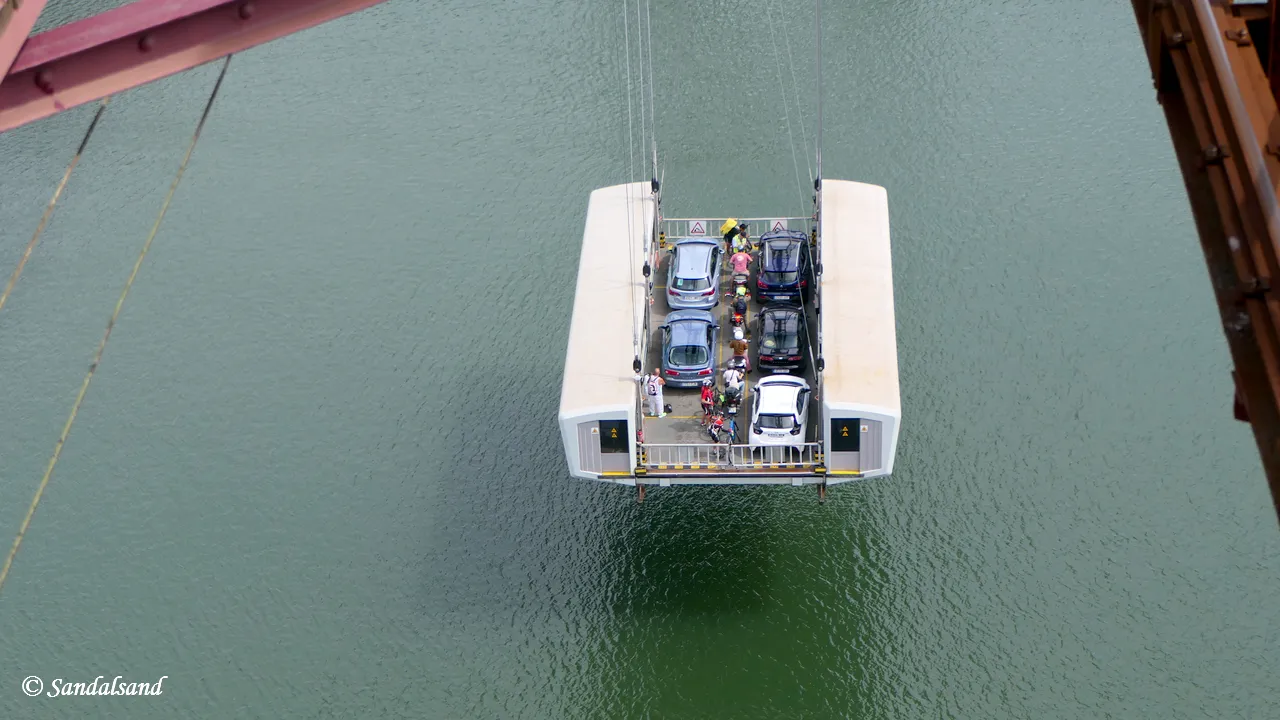
It quickly became evident that the Vizcaya Bridge remains part of everyday life. More than 130 years after its inauguration, the suspended gondola still glides across the estuary almost continuously, carrying both passengers and vehicles between Portugalete and Getxo.
I bought a ticket and boarded the gondola for the short crossing. Within only a few minutes I had reached Getxo on the opposite bank. Locals with scooters and cars travelled alongside tourists, giving the experience a surprisingly ordinary atmosphere despite the bridge’s global heritage status.
That is perhaps what makes the Vizcaya Bridge so special. Crossing it is not merely a tourist activity, but a small journey through the living industrial heritage of the Basque Country.
I did not spend much time in Getxo before realising I should instead have purchased the combination ticket. This allows visitors to cross by gondola one way and return via the elevated pedestrian walkway suspended high above the river.
And back on the walkway
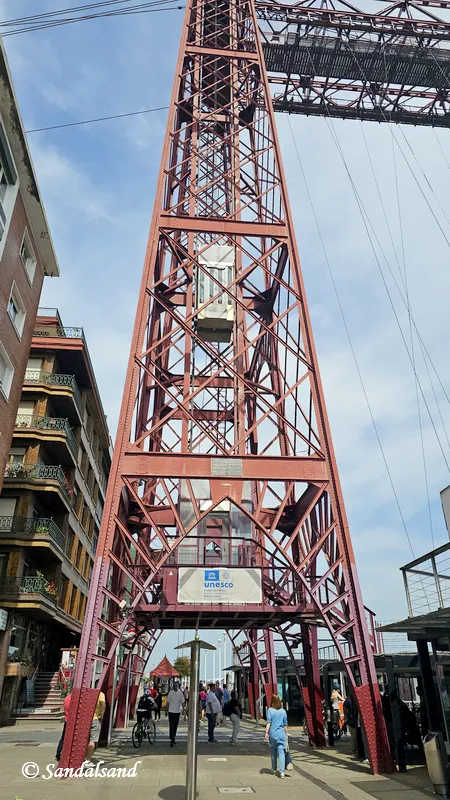
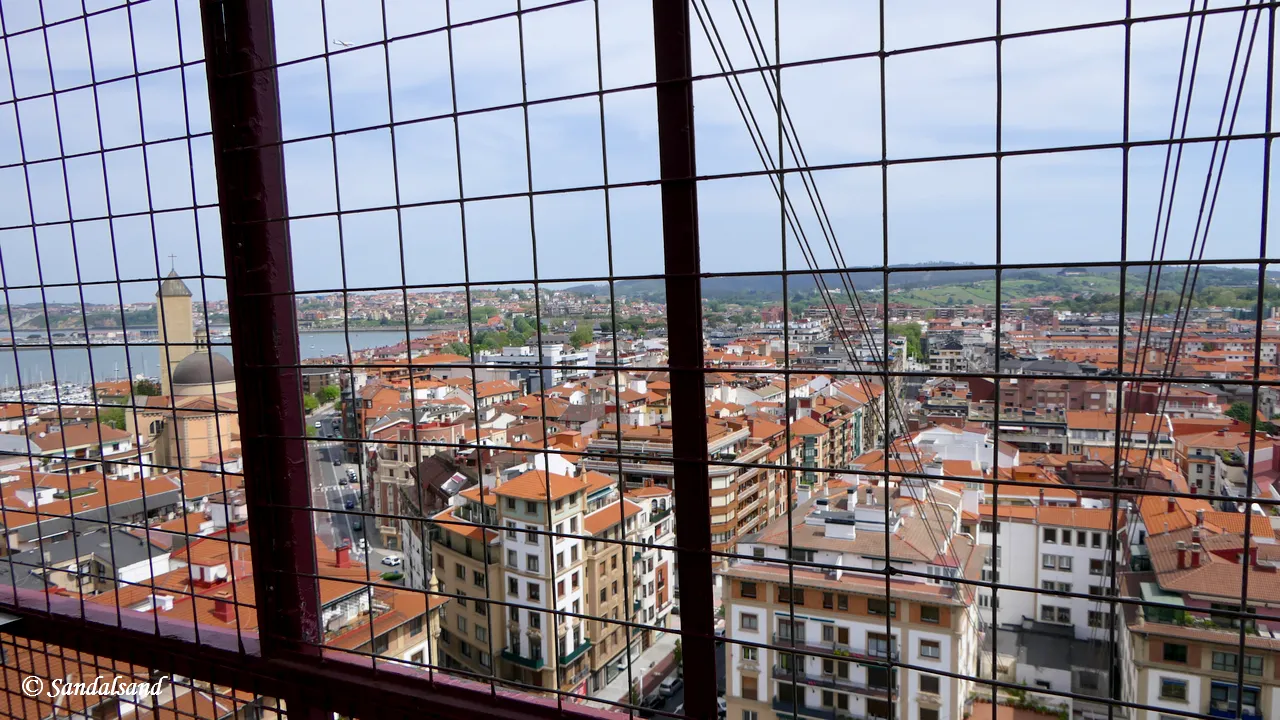
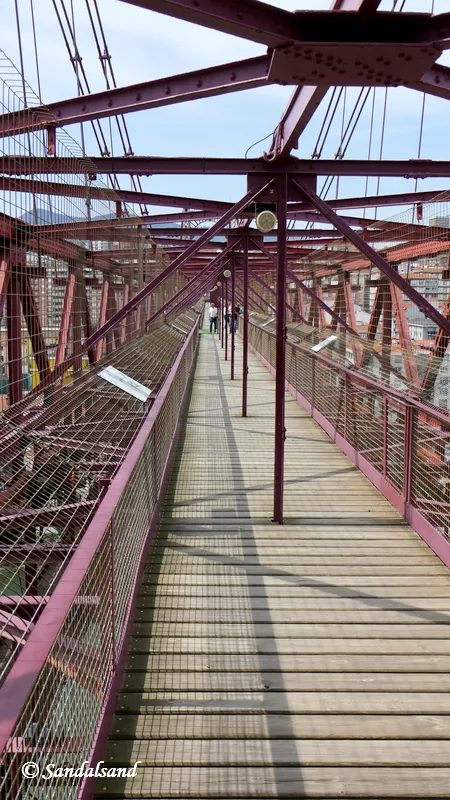
The walkway rises around 45 metres above the estuary and stretches roughly 160 metres between the towers. Elevators provide access from both sides. Information panels explain the history of the bridge and present other transporter bridges around the world. During my visit in April 2026, however, some of the displays appeared dated and could have benefited from improved English translations and updated illustrations.
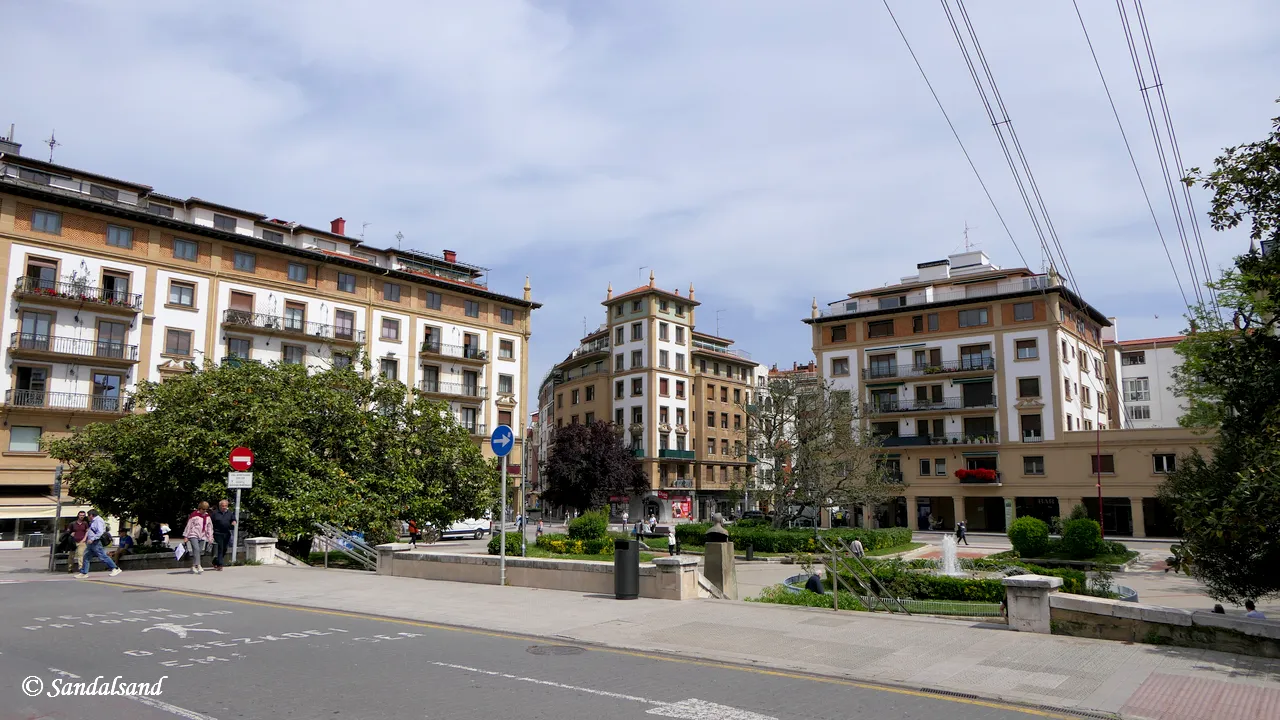
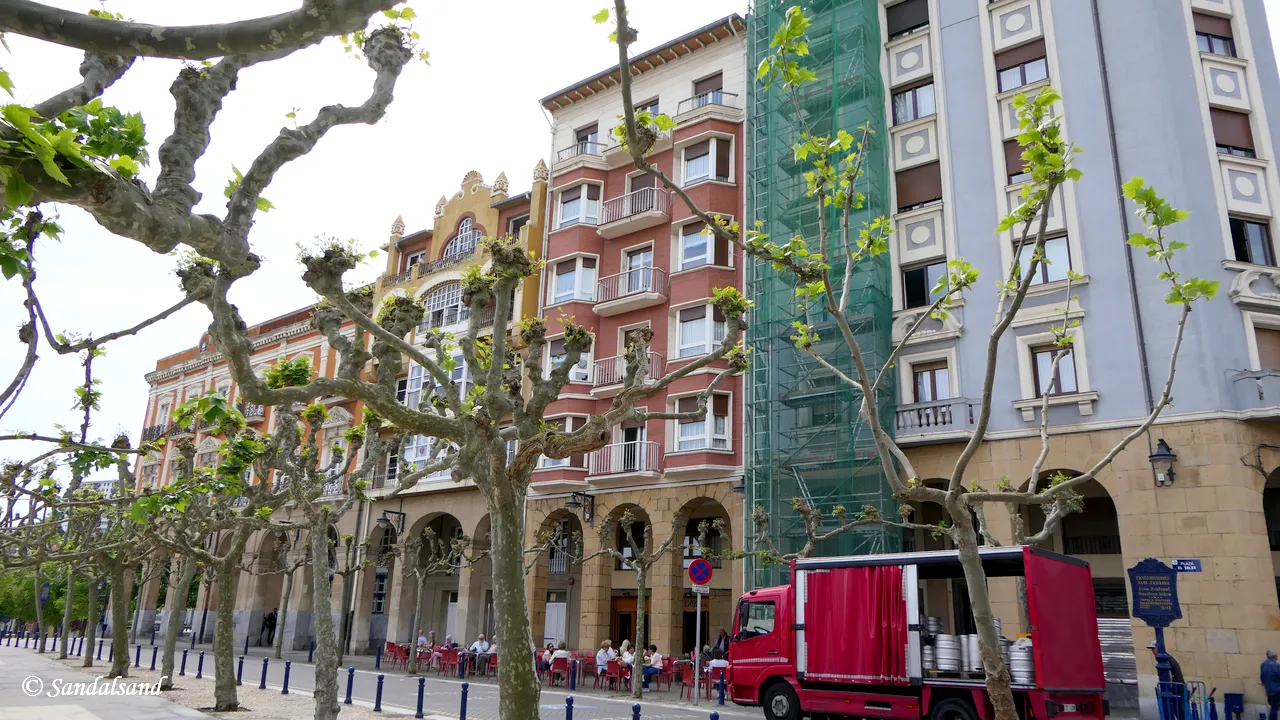
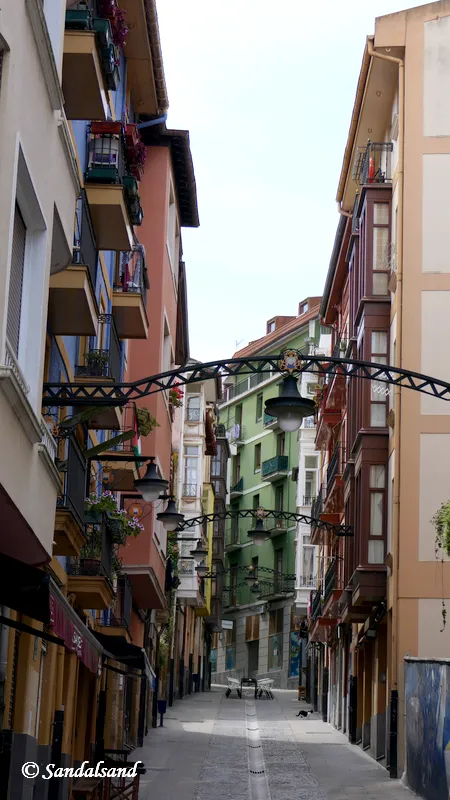
The panoramic views more than compensated. From the overhead walkway there were breathtaking vistas of the river estuary, the Bay of Biscay coastline and the industrial outskirts of Bilbao. Afterwards I spent some time wandering along the riverfront streets of Portugalete. They felt calm and atmospheric — a striking contrast to the busier and more tourist-oriented centre of Bilbao.
Read more
Find more articles from Spain on Sandalsand. Finally, where is this bridge? Zoom in on Sandalsand's map from this road trip in the north of Spain.
